Technique
- There are multiple ways to get into the Handstand: you can balance off the wall, you can jump straight into it, you can press into it from the ground, or you can split your legs. That last one is generally easier. To do that, place your hands on the ground, lift one leg up, and jump off the other one, then slowly bring the legs together at the top.
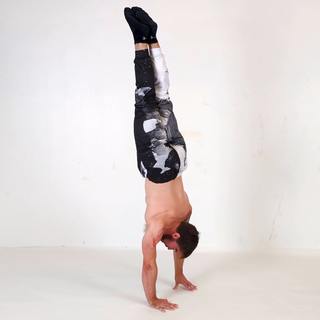
- To be able to balance, you will need to dig your fingertips into the ground, so that your center of mass is on a line somewhere between your wrists and your fingertips.
- When making several attempts at balancing, only log one set when you manage to find the balance point for at least a few seconds; if you don’t manage to balance and fall, do not log the set. If you have too much difficulty finding the balance, do work on the wall ( Back-to-wall handstand or Chest-to-wall handstand).
- Balancing a handstand is a long journey and it takes many people years of practice to get it; if you keep at it, you too can achieve it!
Form tips
- In the standard Handstand, your body is forming a straight line from toes to hands. This requires opening the shoulders (180 degrees Shoulder flexion backward), maintaining a posterior Pelvic tilt and activating the Abs (“sucking the bellybutton in”).
- It can also help to squeeze the legs together and point the toes, to create full body tension.
Muscles
Strength

Primary
- Back
- Serratus anterior
- Shoulders
- Neck
Secondary
- Forearms
Individual muscles
Individual muscles
- Lower trapezius
- Serratus anterior
- Posterior deltoid
- Upper trapezius
- Levator scapulae
Equipment
Appears in
Balance
Calisthenics skills
Other disciplines
Joint movements
Progressions
Chair handstand
Advanced

Rings strap handstand
Advanced
Handstand with 5 fingers support
Advanced
Regressions
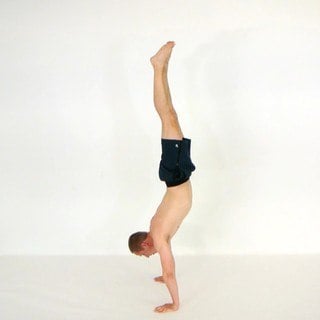
Curved handstand
Intermediate
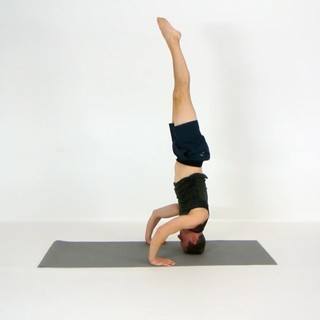
Tripod headstand
Novice
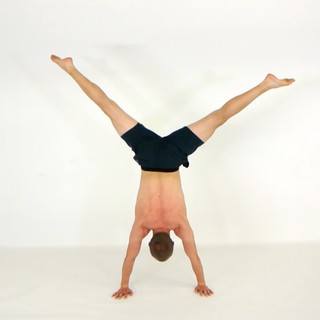
Straddle handstand
Advanced
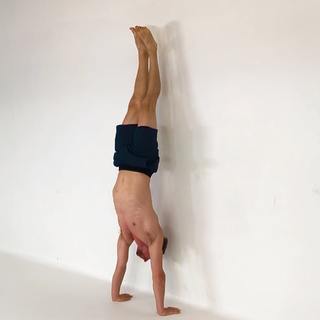
Wall handstand heel pulls
Intermediate
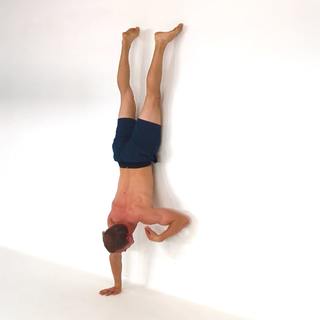
Wall handstand shoulder taps
Intermediate
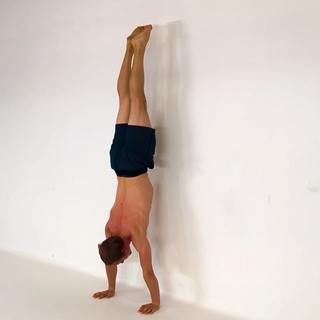
Wall handstand toe pulls
Intermediate
View Similar Exercises
View Similar Exercises
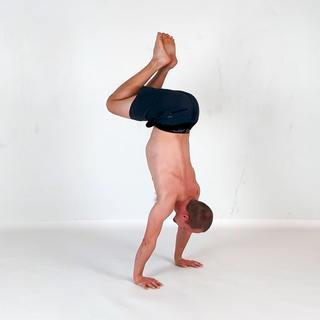
Tuck handstand
Advanced
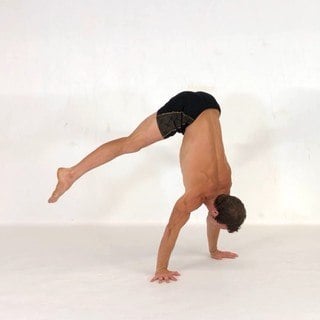
Straight-arm straddle press-to-handstand
Advanced

Split legs handstand
Advanced
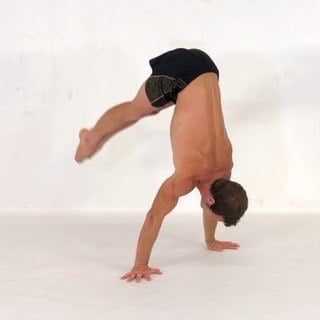
Straight-arm pike press-to-handstand
Elite
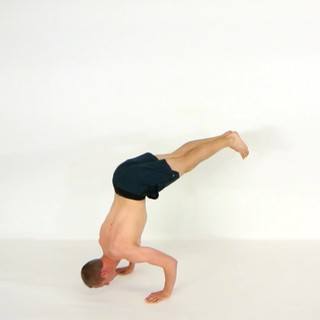
Bent-arm pike press-to-handstand
Advanced
Want to log this exercise? Open it in Calistree. Text and images are used under CC BY-NC-ND 4.0; the video plays from the original source.