Technique
- This exercise is a great precursor to the One-arm handstand and a natural progression from the Narrow handstand.
- Overlap one hand over the other. The bottom hand is the base hand and should support the majority of the weight; 80% of the pressure-balance should be focused on this hand. The support hand on top of the base hand should be active, but light, so it does not interfere with the corrections made by the base hand.
- Since the weight is supported asymmetrically, it may be easier to enter from a cartwheel-like position. If the left hand is the bottom base hand, walk both feet slightly to the left after planting the hands. The right leg should swing up for the pseudo-cartwheel entrance.
- Entering into a Straddle position should be the easiest position to balance. Once there is a certain degree of comfort in the entrance and Straddle position with the Stacked hands handstand, then shape exploration is recommended (straight legs, Tuck position,…)
Logging: Work each side for the time indicated.
Muscles
Strength

Primary
- Back
- Serratus anterior
- Shoulders
- Neck
Secondary
- Forearms
Individual muscles
Individual muscles
- Lower trapezius
- Serratus anterior
- Posterior deltoid
- Upper trapezius
- Levator scapulae
Equipment
Appears in
Balance
Calisthenics skills
Joint movements
Regressions
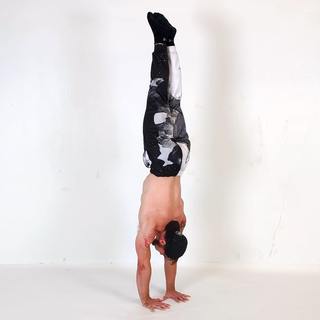
Narrow handstand
Advanced
View Similar Exercises
View Similar Exercises
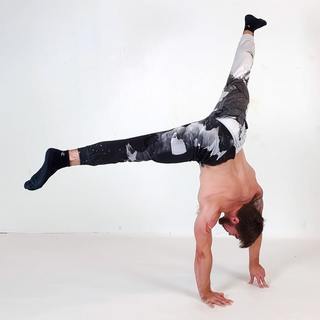
Straddle handstand with 3 fingers support
Elite
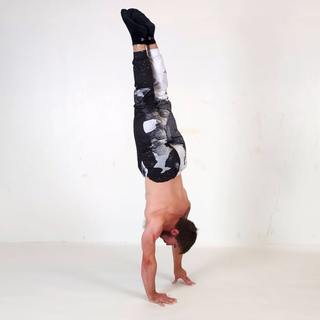
Handstand with 3 fingers support
Elite
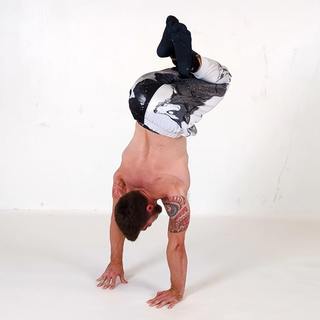
Tuck handstand with 5 fingers support
Elite

Tuck handstand with 4 fingers support
Elite
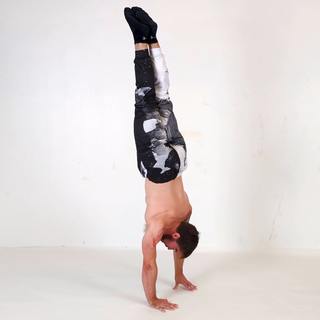
Handstand with 5 fingers support
Advanced
Want to log this exercise? Open it in Calistree. Text and images are used under CC BY-NC-ND 4.0; the video plays from the original source.