Technique
- From a stable Straddle handstand, begin by shifting the gaze to the base hand that will support most of your weight. The gaze should be around the first knuckle of the thumb or index finger, but your unique focal point may be slightly different.
- Next, create a diagonal by pulling the leg on the side of the base hand slightly towards the floor. Avoid dramatically shifting the hips out; instead, focus on keeping the hips above the shoulders while actively pulling the thigh into the ribcage for the diagonal.
- The diagonal should create a sensation of more weight in the base hand. Push the base hand into the floor hard to get a bit more Shoulder flexion backward and Shoulder elevation. Think about the shoulder pushing high up to touch the ear or chin. This additional push will straighten the spine and allow the fingers of the supporting hand to tent up, up until only 4 fingertips are touching the ground.
Form tips
- Do not try lifting the support hand directly. The tenting of the support hand should primarily come as a necessary reaction to the Shoulder elevation on the base hand.
Logging: Work each side for the time indicated.
Muscles
Strength

Primary
- Back
- Serratus anterior
- Shoulders
- Neck
Secondary
- Forearms
Individual muscles
Individual muscles
- Lower trapezius
- Serratus anterior
- Posterior deltoid
- Upper trapezius
- Levator scapulae
Equipment
Appears in
Balance
Calisthenics skills
Joint movements
Progressions
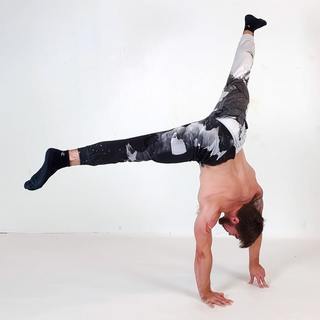
Straddle handstand with 3 fingers support
Elite
Regressions
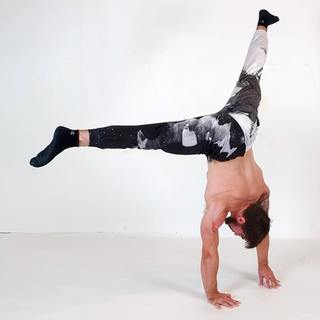
Straddle handstand with 5 fingers support
Advanced
View Similar Exercises
View Similar Exercises
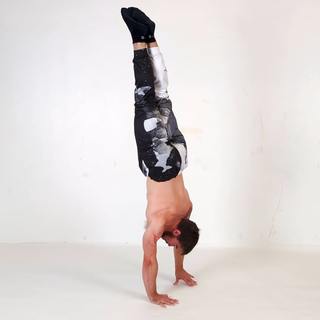
Handstand with 4 fingers support
Advanced
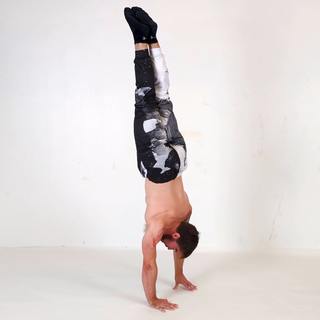
Handstand with 5 fingers support
Advanced

Stacked hands handstand
Elite

Tuck handstand with 4 fingers support
Elite
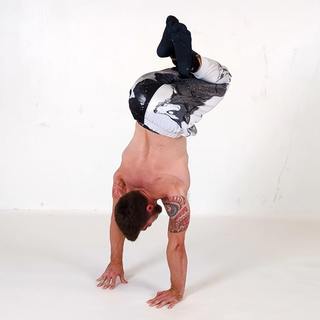
Tuck handstand with 5 fingers support
Elite
Want to log this exercise? Open it in Calistree. Text and images are used under CC BY-NC-ND 4.0; the video plays from the original source.